
Periodontal Treatment
Professional treatment for gum disease to protect your teeth and overall health
Understanding Gum Disease
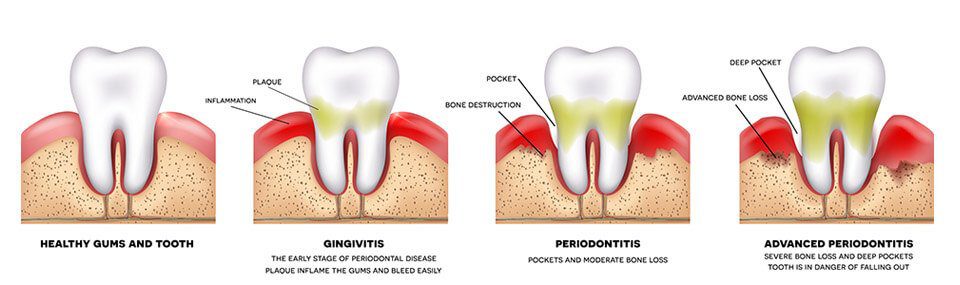
Periodontal Gum Treatment (for gum disease) is the treatment of swelling, soreness or infection of the tissues supporting the teeth. There are two main types of gum disease: 'gingivitis' and 'periodontitis'. Gingivitis means inflammation of the gums. This is when the gums around the teeth become very red and swollen. Often the swollen gums bleed when you brush them, they may also bleed when eating, leaving a bad taste in your mouth. Your breath may also become unpleasant.
Long-standing gingivitis can turn into periodontitis. There are a number of types of periodontal disease and they all affect the tissues supporting the teeth. Where periodontal disease occurs, the bacteria grow down below the gum margin along the root surface. The gums detach from the tooth and form so called "pockets".
How Periodontal Disease Progresses
The body's immune system fights the bacteria as the plaque spreads and grows below the gum line. Bacterial toxins and the body's natural response to infection start to break down the bone and connective tissue that hold teeth in place. If not treated, the bone, gums, and tissue that support the teeth are destroyed.
As gum disease progresses, loss of bone support becomes evident with the loosening of teeth, gum recession giving the appearance of elongated teeth and separation of gum tissue from teeth resulting from the loss of bone and the accumulation of debris (plaque and tartar) on the root surfaces. The spaces that form between the teeth and gum tissue become pockets filled with infection and possible pus formation.
Impact on Overall Health
If periodontal disease is left untreated it can lead to tooth loss. Most people have some form of gum disease, and it is the major cause of tooth loss in adults. However, the disease develops very slowly in most people, and it can be slowed down to a rate that should allow you to keep most of your teeth for life.
Gum disease has been linked with:
While more research is needed to understand how these links work, there is increasing evidence that having healthy gums can help improve general health.
What Causes Gum Disease?
All gum disease is caused by plaque. Plaque is a film of bacteria which forms on the surface of the teeth every day. Many of the bacteria in plaque are harmless, but there are some that have been shown to be the main cause of gum disease. To prevent and treat gum disease, you need to make sure you remove all the plaque from your teeth every day. You can do this by brushing your teeth, and by cleaning in between the teeth with interdental brushes or floss.
Smoking & Gum Disease
People who smoke are more likely to have gum disease. Smoking may change the type of bacteria in dental plaque, increasing the number of bacteria that are more harmful. It also reduces the blood flow in the gums and supporting tissues of the tooth and makes them more likely to become inflamed. Smokers' gum disease will get worse more rapidly than in people who do not smoke. Because of the reduced blood flow smokers may not get the warning symptoms of bleeding gums as much as non-smokers.
Warning Signs
Contact us if you notice:
- Bleeding gums when brushing
- Red, swollen gums
- Bad breath
- Loose teeth
- Receding gums
- Pus between teeth and gums
Early Detection is Key
Book a periodontal assessment to catch gum disease early
Book AssessmentView PricesTreatment of Gum Disease
Initial Assessment
The first thing to do is visit your dentist for a thorough check-up of your teeth and gums. The dentist can measure the 'cuff' of gum around each tooth to see if there is any sign that periodontal disease has started. X-rays may also be needed to see the amount of bone that has been lost. This assessment is very important, so the correct treatment can be prescribed for you.
Professional Cleaning
Your dentist will usually clean your teeth thoroughly to remove the scale. You'll also be shown how to remove plaque successfully yourself, cleaning all the surfaces of your teeth thoroughly and effectively. Once your teeth are clean, your dentist may decide to carry out further cleaning of the roots of the teeth. This is known as root planing or non-surgical debridement.
You may need the treatment area to be numbed before anything is done. Afterwards, you may feel some discomfort for up to 48 hours. This may take a number of sessions with the dentist or hygienist.
Home Care
A good oral-care routine at home, with brushing and interdental cleaning, is the most important thing you can do to help prevent gum disease getting worse.
One negative aspect of successful treatment is that the initially swollen and inflamed gums will often recede as they heal. This can have an impact on the appearance of the teeth and also can sometimes result in sensitivity if the root dentine is left exposed. Your dentist may be able to offer desensitizing treatments for these areas and certainly desensitizing toothpaste will help to reduce any discomfort.
Important to Remember
Periodontal disease is never cured, but it can be controlled as long as you keep up the home care you have been taught. Any further loss of bone will be very slow and it may stop altogether. However, you must make sure you remove plaque every day, and go for regular check-ups by the dentist and hygienist.
